-
 Ua
-
 En
 Ua
En
| Year of birth: | 1910 |
| Date of death: | Unknown |
| Location of the Stumbling Stone: | 51 Antonovycha Street |
| Stumbling Stone installation date: | 06 November 2026 |
| Research teams | |
| Caregiver | No |
Odesa Lyceum No. 50 of the Odesa City Council
Maksym Panin, History teacher
Kateryna Zaiko
Olha Khivrenko
Illia Tkachenko
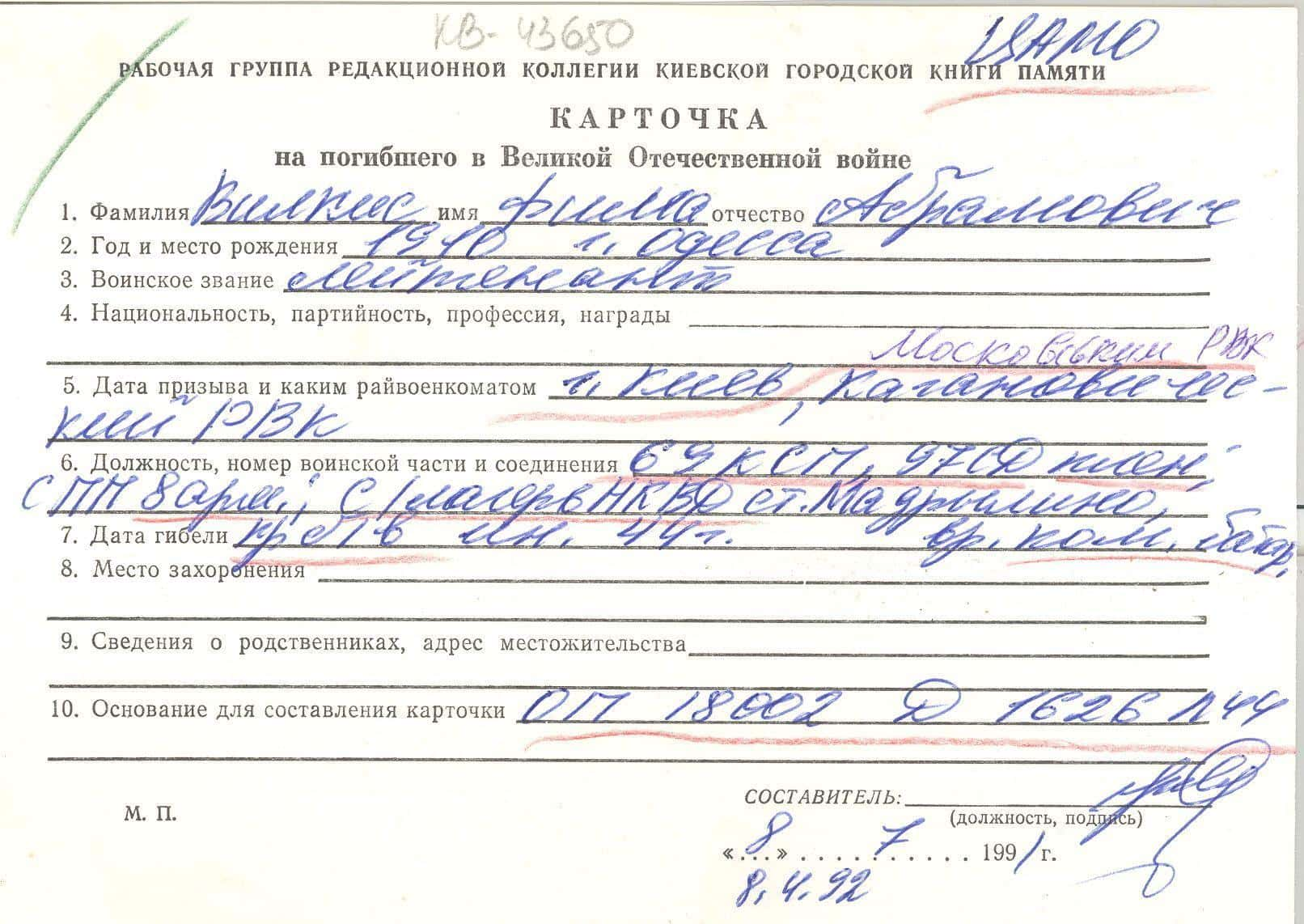
Froim Vilkis was born in Odesa in 1910.
Family: He was married to Sara, and their son Abram was born in 1937. Froim’s wife and son were shot at Babyn Yar on September 29-30, 1941.
Vilkis family lived in Kyiv at 51 Horkoho Street (today Antonovycha Street).
Froim came from a working-class family and completed seven years of school. In Kyiv, he worked at different times as a loader and as an employee at the railway station. From 1932 to 1941 he served in the Red Army and by 1944 held the rank of a lieutenant.
At the start of the German-Soviet war, Froim was at the front, but in September 1941 he was among the encircled in Poltava region and taken prisoner by the Germans. In Kyiv, he was sent to the police school, where he and other prisoners were held in horrific conditions and forced to do menial work. From there, Froim was transferred to the Syrets concentration camp. In the camp he was abused and witnessed the torture of other prisoners.
On August 14, 1943, during the successful Soviet counteroffensive, the Nazis decided to erase the traces of their crimes at Babyn Yar. Froim, among another hundred prisoners, was forced to take part in the destruction of the bodies of the executed. The prisoners had to exhume the corpses and burn them on makeshift furnaces built from gravestones and fences taken from the nearby Jewish cemetery.
On the night of September 28-29, 1943, an rebellion and a mass escape took place among the prisoners, who feared they would become the Nazis’ next victims. Froim was one of the initiators of the uprising. Out of several hundred prisoners no more than two dozen survived. Until the Red Army liberated Kyiv on November 6, Froim was hiding at a nearby brick factory.
In November-December 1943, Froim managed to provide crucial information as a witness to Nazi crimes in Kyiv. This included a statement against collaborators he identified, as well as subsequent interrogation protocols by the NKVD (People’s Commissariat for Internal Affairs) and NKGB (People’s Commissariat for State Security).
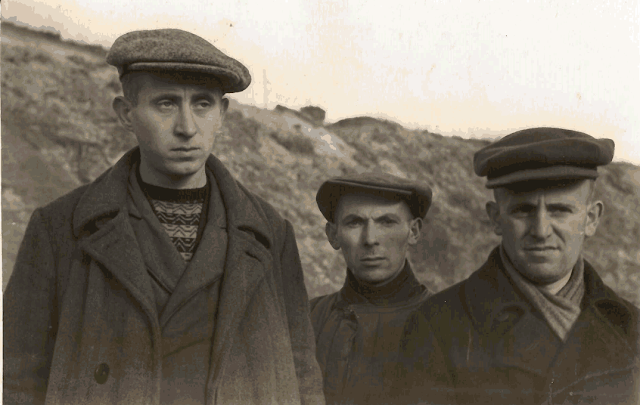
Around this time, American journalists from The New York Times and British journalists from Newsweek arrived at Babyn Yar to investigate the site of Nazi mass crimes. To ensure a complete testimony, Soviet authorities brought Froim and two other surviving witnesses to meet the foreign correspondents. Photographs and film footage of this meeting have been preserved. In the New York Times article of November 29, 1943, Froim was described as the “chief witness” of the Babyn Yar tragedy.
Froim also appeared in the only known wartime sound film recording from Babyn Yar, giving a two‑minute testimony about the horrors he had endured. However, he did not leave further testimony, as he was mobilized again. The last record of Froim Vilkis dates back to 1944; since then, he has been considered missing in action.