-
 Ua
Ua
-
 En
En
 Ua
En
Ua
En
| Year of birth: | 1865 |
| Date of death: | Date of installation of the stumbling stone: |
| Address of the stumbling stone: | 28/9 Chykalenko Street |
| Date of installation of the stumbling stone: | 5 October 2026 |
| Research teams | |
| Caregiver | Yes |
Lyceum No. 173, Kyiv
Valerii Nehmatov, History teacher
Violetta Petrunko
Tetiana Nedilko
Daryna Suzdol
Yelyzaveta Shestakova
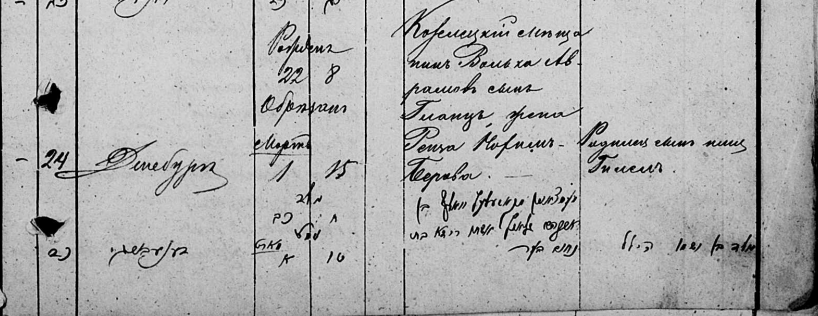
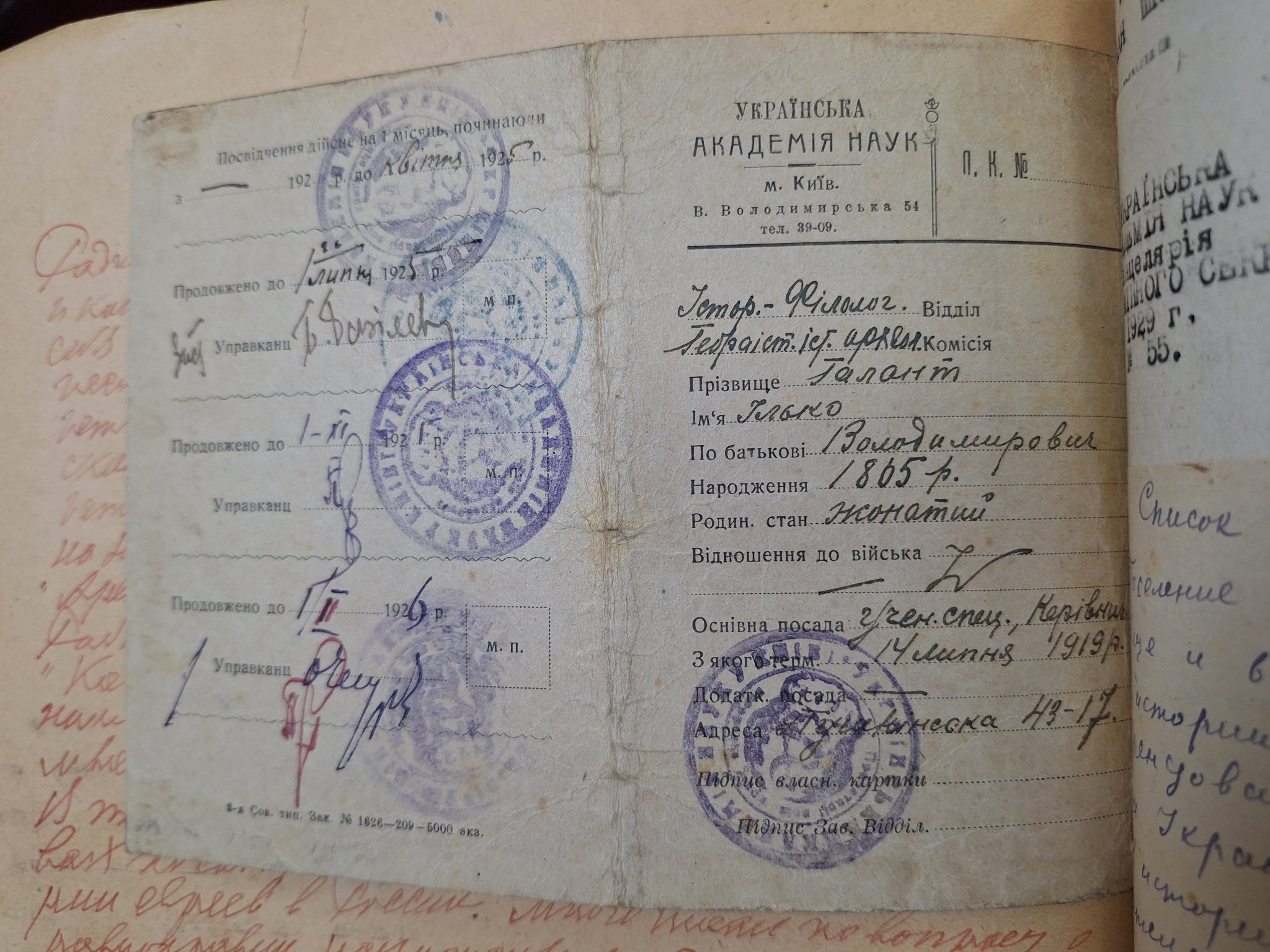
Illya Galant (originally named Hillel Glantz) was an unjustly forgotten Ukrainian historian-archivist, Hebraist, educator and writer. He was born in 1865 in Nizhyn.
Family: Illya Galant had a wife Klara, and daughters Anna and Olena.
The future scholar received a home-based religious education and attended schools in his native Nizhyn. He was largely self-educated, but the Nizhyn Historical and Philological Institute of Prince Bezborodko gave him an opportunity to deepen his knowledge of and interest in history. It was in the institute’s library that Galant began his professional career: there he independently learned how to work with archives.
In the 1890s, Illya Galant moved to Kyiv, where he taught Jewish religious studies (Judaism) at the Second Kyiv Commercial School, located at 28/9 Pushkinska Street (now Chykalenko Street), as well as at the Jewish religious school, the Talmud Torah, in Podil. At the same time, he researched rare materials on Jewish history in the Kyiv Central Archive of Ancient Acts at Kyiv University: metric books, pinkasim (registers of Jewish communities), and police files.
His knowledge of Hebrew allowed Galant to analyse the internal materials of the kahals (Jewish communal self-governing bodies). He published in many journals of the time, including the first historical journal in Ukraine “Kievskaya starina”.
A central theme of Galant’s research was the relationship between Ukrainians and Jews and their shared history. In historical sources, he identified evidence of peaceful coexistence and mutual support between the two communities. He also explored some of the most controversial chapters in the history of Jewish life in Ukrainian lands, including cases involving accusations of “blood libel”, ritual murder trials, and anti-Jewish violence.
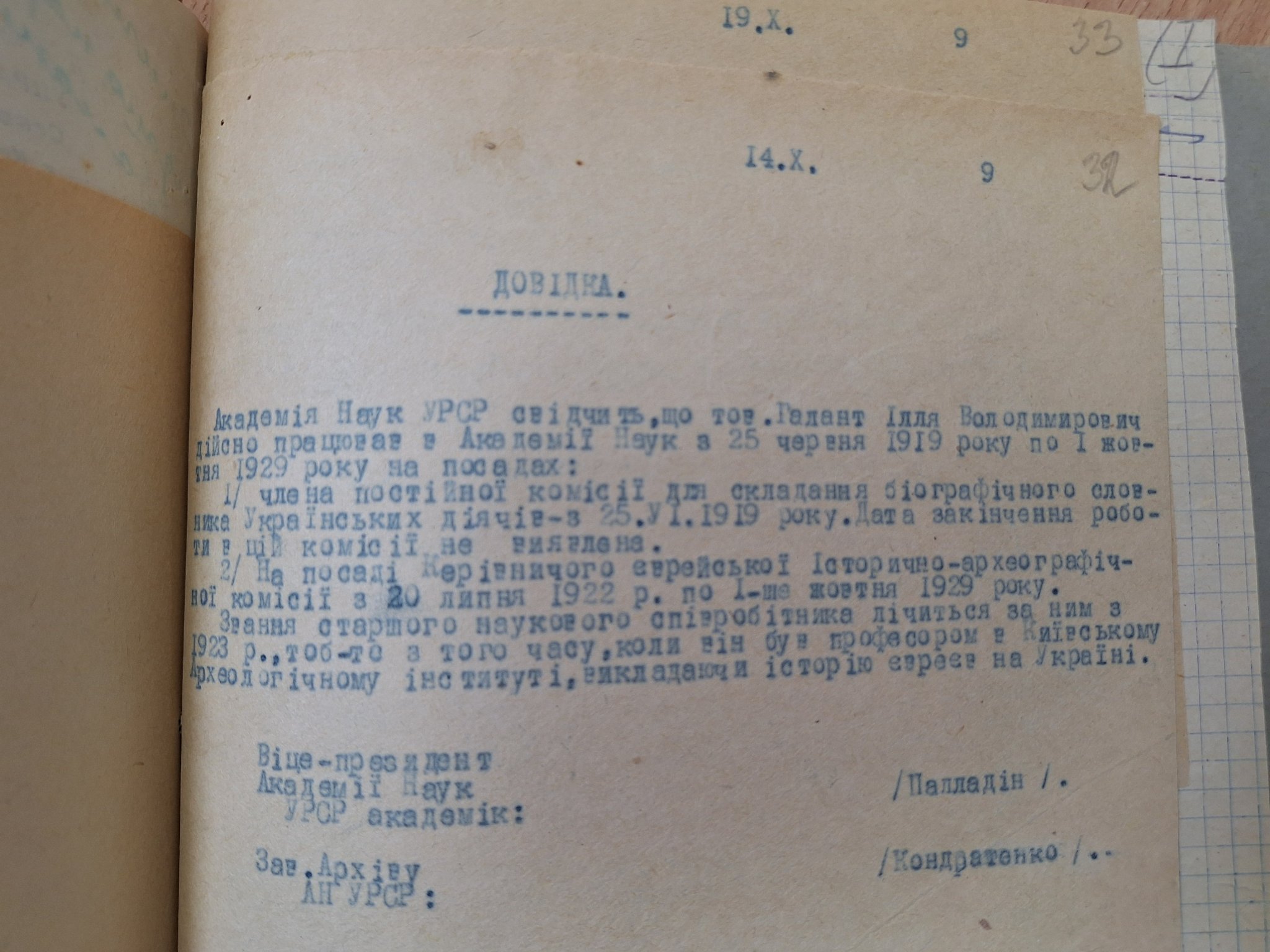
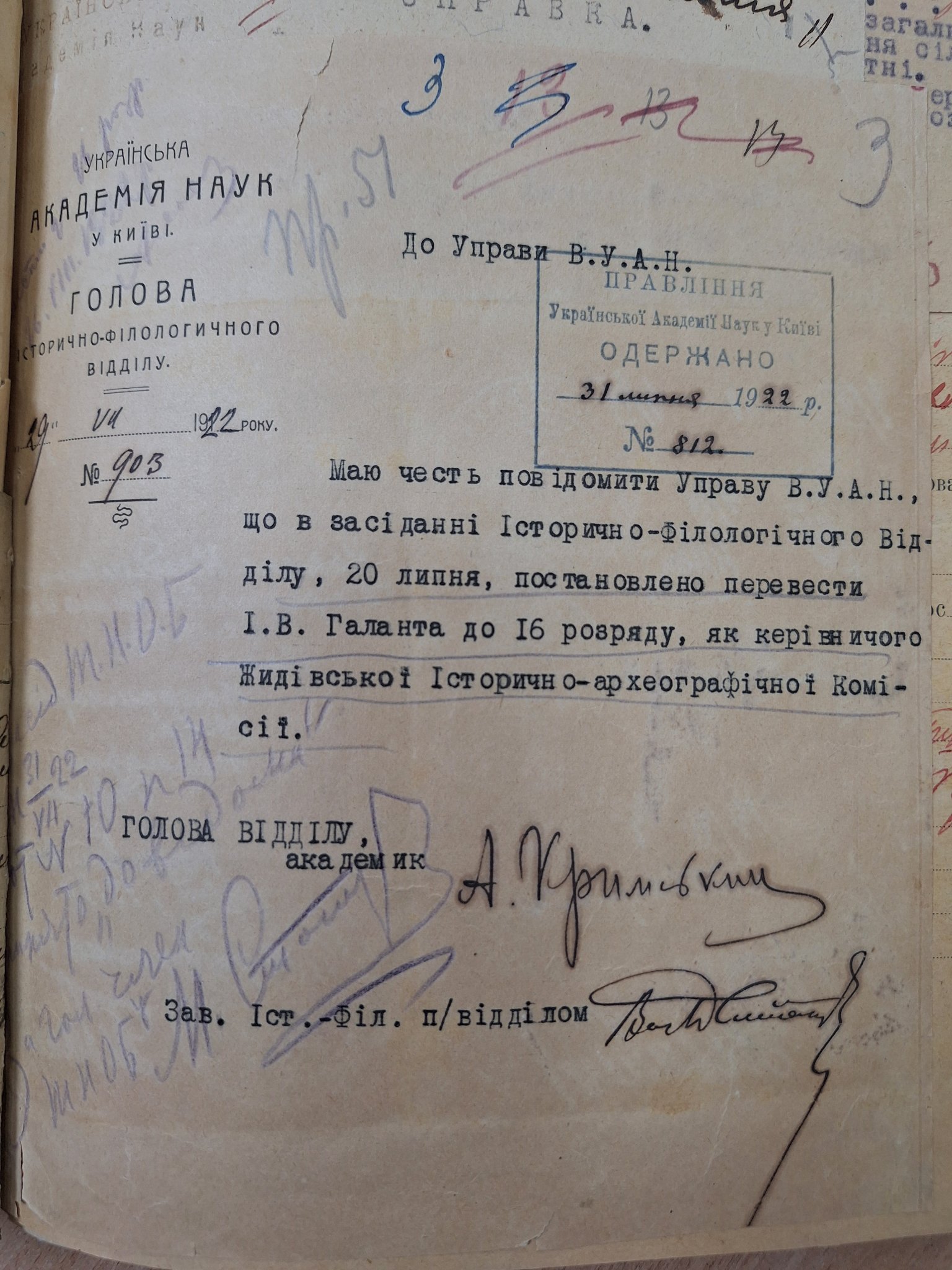
In 1919, Galant initiated the establishment of the Jewish Historical-Archaeographic Commission at the All-Ukrainian Academy of Sciences, which he headed from 1924. During the five years of the commission’s existence, it prepared for publication and published two parts of the “Collection of Works of the Jewish Historical-Archaeographic Commission”, bringing into scholarly circulation a unique collection of documents documenting the political, economic, religious and cultural life of the Jews of Ukraine.
The commission maintained academic contacts with Jewish institutions in Western Europe. Throughout its existence, it was subjected to ideological pressure from the Soviet party leadership of the Ukrainian SSR for “nationalism and bourgeoisness”. It was dissolved in 1929.
The scholar and, probably, his family were killed during the mass shootings in Kyiv at Babyn Yar on 29-30 September 1941. The Yad Vashem memorial complex in Jerusalem included the historian’s name in its lists of Holocaust victims.
Today, there is an active effort to restore the name of Illya Galant to the scholarly community in Ukraine as a researcher of Jewish cultural heritage.
Reprint of Illia Galant’s article Kyiv Metropolitan Petro Mohyla and His Attitude Toward Jews in the journal Kievskaia starina (vol. 89, May 1905).